 Image 1 of 1
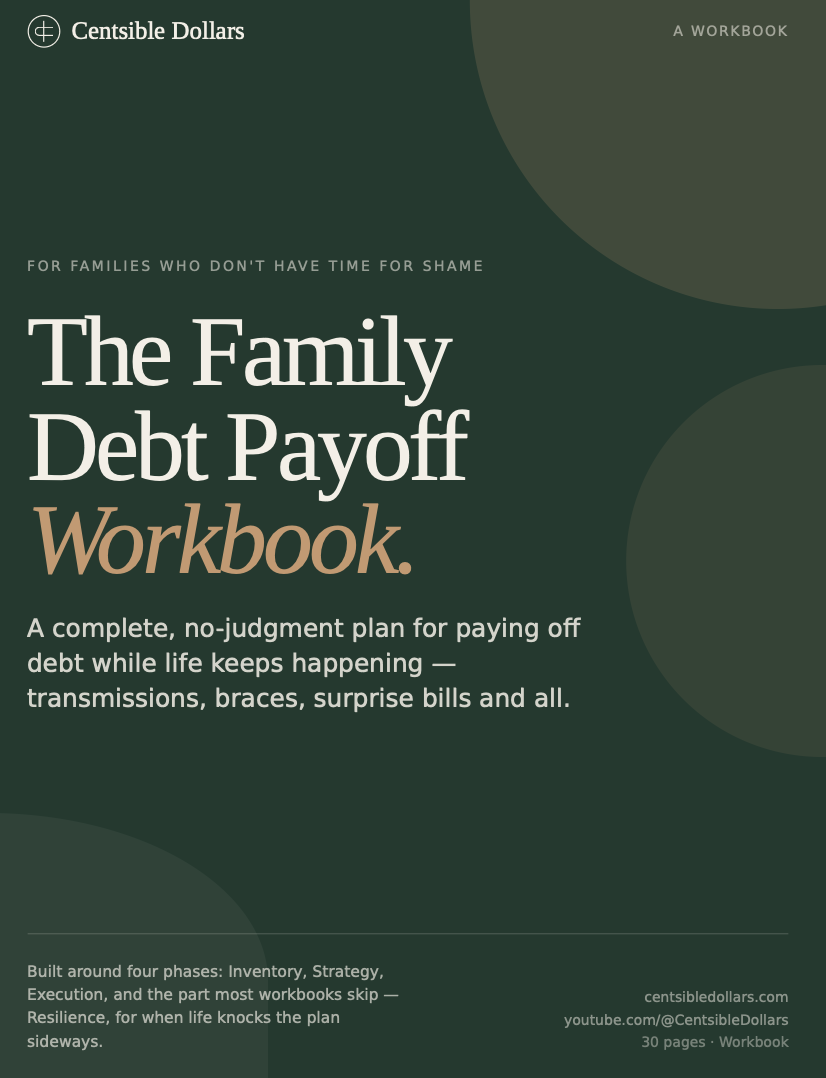
A complete, no-judgment plan for paying off debt while life keeps happening — transmissions, braces, surprise bills and all. 30 pages. Built around four phases including the one most workbooks skip: what to do when life knocks the plan sideways.
Most debt-payoff workbooks are built for a version of life that doesn't exist. They give you a plan, a timeline, and a set of monthly numbers — and then act surprised when the car breaks down in month three and the whole thing falls apart. The math wasn't wrong. The framework was incomplete.
This workbook is built differently. It assumes from page one that life is going to interrupt the plan — because it always does. It gives you the standard tools (debt inventory, snowball vs. avalanche, monthly tracker), but it also gives you what most workbooks skip: a four-step recovery framework, four playbooks for the most common derailers (car repairs, medical bills, income drops, and family expenses like Christmas), and a "when you mess up" page specifically designed to be read on bad days.
What you get: a 30-page workbook organized into four phases — Inventory (lay everything on the table), Strategy (pick a method, set your focus debt), Execution (run the plan with a 12-month tracker and milestone celebrations), and Resilience (recovery framework and playbooks for when life happens). Plus bonus content: a couples conversation guide for the harder money talks, common questions, a glossary in plain English, and six tear-out affirmation cards designed to be saved as your phone wallpaper.
The thing this workbook actually does: it gives families the framework they need to finish — not just to start. Most people who attempt debt payoff don't have a math problem. They have a recovery problem. This solves it.
A complete, no-judgment plan for paying off debt while life keeps happening — transmissions, braces, surprise bills and all. 30 pages. Built around four phases including the one most workbooks skip: what to do when life knocks the plan sideways.
Most debt-payoff workbooks are built for a version of life that doesn't exist. They give you a plan, a timeline, and a set of monthly numbers — and then act surprised when the car breaks down in month three and the whole thing falls apart. The math wasn't wrong. The framework was incomplete.
This workbook is built differently. It assumes from page one that life is going to interrupt the plan — because it always does. It gives you the standard tools (debt inventory, snowball vs. avalanche, monthly tracker), but it also gives you what most workbooks skip: a four-step recovery framework, four playbooks for the most common derailers (car repairs, medical bills, income drops, and family expenses like Christmas), and a "when you mess up" page specifically designed to be read on bad days.
What you get: a 30-page workbook organized into four phases — Inventory (lay everything on the table), Strategy (pick a method, set your focus debt), Execution (run the plan with a 12-month tracker and milestone celebrations), and Resilience (recovery framework and playbooks for when life happens). Plus bonus content: a couples conversation guide for the harder money talks, common questions, a glossary in plain English, and six tear-out affirmation cards designed to be saved as your phone wallpaper.
The thing this workbook actually does: it gives families the framework they need to finish — not just to start. Most people who attempt debt payoff don't have a math problem. They have a recovery problem. This solves it.